Friday, May 11, 2007

Medgadget's Wiki


Go here, and you'll find Medgadget's Wiki---who knew!
I ran into this by accident in a Google search.

Saturday, May 5, 2007

Neat Stuff Round Up

THD Blog highlights Stanford's "Rethinking International Health".

Worldchanging covered BusinessWeek's "Design for Social
Innovation"

Anne Swift found SustainLaine, a startup with innovative offerings
that bring awareness of sustainable living. This includes an
animated series, and a national city rankings for sustainability (1.
Portland, 2. Seattle, 3. San Francisco...Boston was 7, yeah!)

She also announces the BiD Challenge 2007---win 20,000 Euros for
your social venture.

And also of note Fast Company's Social Capitalist Awards

Invention2Venture: Affordable Technology

Today's I2V on Affordable Technology at MIT was a fanstastic learning experience. Speakers included:

Amy Smith and Sandy Pentland on approaches to technological development for the developing world; Iqbal Qadir, founder of GrameenPhone, on the need for an intelligent ecosystem of individuals where the right collaboration can thrive; Colin Bulthaup of Squid Labs gave us a tour of their innovation spaces. In addition, the NCIIA had some very interesting programs that are coming up to apply to including their annual E-Teams and newer programs aimed Sustainability.

The panel I participated in discussed how to take your project to the next level for funding, attracting resources, and engaging the decision makers and gatekeepers. More about this at LTDC Conferences and Lectures.

I'm totally wiped out after a week of marathon applications, middle-of-the-night prototyping, and a preparations for a mini vacation! More later!

Thursday, May 3, 2007

The Hype Cycle

Some devices can over promise, underwhelm, or completely take us by surprise. The Gartner group put together what they call the Hype Cycle.

Some years ago a number of analysts observed there was a pattern of new technology," says Laura Behrens, analyst at Gartner. "Something new would happen, there would be tremendous excitement, followed by disillusionment. Then some of those would eventually become well understood in their markets. "This happened with such regularity that they could do this model."

On a curve of development, the Hype Cycle tries to predict where technologies are heading: into our pockets and living rooms, or into the Betamax graveyard.

It starts with the "technology trigger", where a breakthrough or event generates publicity, exposing the gadget or technology to a wider audience. This is not a Middle Earth battle ground; it is where technology goes to wilt when it fails to deliver its promises. As people start to learn more about the technology, it starts to struggle up the slope of enlightenment. The final stage is the "plateau of productivity" when it becomes mainstream.

So I'm curious to add an LTDC Hype Cycle of our own that try to map where the technologies we so often hear about rest along the curve. To begin:
Biofuels
Solar panels
SMS for health
Micro lending/micro insurance
Telemedical Apps
Wireless for the Last Mile
Drug discovery guided by traditional remedies
and yes, the OLPC

What else?
Does anyone know of a cool Ajax or Flash app where people can mark up our curves?

Wednesday, May 2, 2007

Aerovax speaks at Lemelson Program's "Invention to Venture: Affordable Technology"

Invention to Venture: Affordable Technology


On Saturday (day after tomorrow), the Lemelson-MIT program will host a day long workshop on affordable tech. It's action packed, well thought out, and Esmeralda and Jose will be speaking on one the panels in the afternoon (about Aerovax, opportunities at BOP, and how to convey that to investors), along with Chuck Lacy, President of Vermont-based Barred Rock Fund and former President of Ben and Jerry's.

Here's the stats:

Workshop Details:

Conference Co-Chairs: Iqbal Quadir and Sandy Pentland

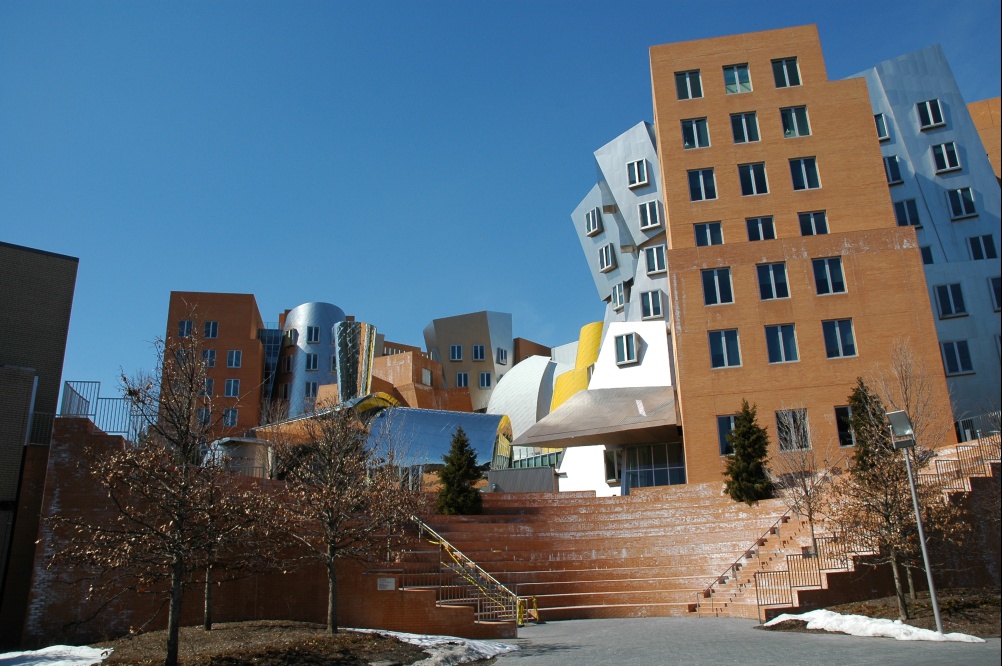
Date: Saturday, May 5, 2007 Time: 9:30 a.m. – 3:30 p.m. Location: Stata Center (32-155), MIT. The Stata is the weird building in case you don't know where to go.

Mention Aerovax at the entrance and you get a free inhalables measles shot, cherry and orange flavors upon request.


I think this will be fun...there's lots of panels. It will add the my backlog of entries for LTDC.

There is also some cool stuff going on this week---
part of EUREKA FEST.


Hopefully I'll see some you there. Okay, I was kidding about the measles, but you can learn more about it anyways.

Friday, April 20, 2007

International Development Conference at KSG this weekend!


Unlike last time, I didn't forget to register for this!

http://idcharvard.org/schedule.html

Monday, April 16, 2007

Handheld Scanner Detects Brain Injuries


In 2004, InfraScan won the Wharton Business Plan competition for a "a cost effective, mobile medical imaging system for detecting brain hematomas". After some substantial pre-clinical funding, they have a device that uses differential near-infrared light absorbtion to tell the difference between the bleeding versus non bleeding parts of the brain. That way you can detect a hematoma even you are hours away from getting to a proper CT scan. The patent protected device is now pending FDA approval.

More at Medgadget

Sunday, April 15, 2007

Tuesday: Global Health Challenge Symposium

THD Blog reminded us about Rice's Global Health Challenge Symposium on Tuesday.
This is part of a larger program at Rice called Beyond Borders:
Beyond Traditional Borders encourages students to transcend geographic and disciplinary boundaries to understand, address and solve health problems in the developing world through the design and implementation of new appropriate health technologies.
Perhaps anyone out there will take some notes for us, sounds like a great event.

A Round Up of Neat Stuff

THD Blog highlights Stanford's "Rethinking International Health".

Worldchanging covered BusinessWeek's "Design for Social Innovation"

Anne Swift found SustainLaine, a startup with innovative offerings that bring awareness of sustainable living. This includes an animated series, and a national city rankings for sustainability (1. Portland, 2. Seattle, 3. San Francisco...Boston was 7, yeah!)

She also announces the BiD Challenge 2007---win 20,000 Euros for your social venture.

And also of note Fast Company's Social Capitalist Awards

Check out US AID's New Health Database


Our friends at World Bank PSD blog has uncovered a very cool health database: The Private SEctor Partnership for Better Health. It's run by USAID as a guide to who's doing what in the public-private global health area.

Some snippets:
Unilever has funded two ambulances that visit remote villages in India. Proctor & Gamble sending the PUR filter to Dominican Republic with the help of Population Services International. Greenstar sells a variety of products aimed at reproductive and mother/baby health in Pakistan.

Enjoy searching here.

Vaccines are so 1955, try filtering the bugs out


Aethlon Medical’s wants get rid of any dangerous biowarfare agents you may have caught by filtering them out of your blood. We’ve come a long way from leeching and bleeding. Their Hemo Purifier filter cartridges employ plant-derived antibodies that adhere to viruses. Their two versions include a device for the ICE about a foot long, and a portable version the size of a large pen. They envision it connecting to the extracorporeal circuits of a dyalisis machine. No word on how long the procedure takes or how much it will cost. If successful, an emeregency drill might sound like “Find the nearest vein start filtering!” instead of “Duck and cover”.

More at Aethlon Medical

Friday, April 13, 2007

Portable ECG monitor

Over the past few months, I have become a little more familiar with the market for critical care monitoring in low-resource settings, so when I saw this new technology, I could not help but think about the potential for its use in the developing world as a low-cost monitor.

You can read more about it here

Tranforming Global Health Recap Recap

The full notes of the TiE Transforming Global Health are now at LTDC Conferences and Lectures. It's much easier to set up a parallel system for lengthy posts than taking up a bunch of space on this one. So here's what you'll see in the expanded version:
  • Dr. Gerald Keusch, Associate Provost for Global Health, talking about new perspectives in tackling Global Health using innovation and political will.
  • MGH's Thomas Burke, MD sharing the wealth of initiatives housed under MGH's Center for Global Health and Disaster Response. Including a project that repurposes an automobile into an isolette for babies (my favorite).
  • Durable and locally manufacturable microfluidic diagnostic devices by the Klapperich Lab at BU.
  • Need to catch up on your C-section skills? Try a few dry runs on a mother-baby simulator by the SIM Group at CIMIT thanks to advanced tissue engineering and software.
  • Zebra Med: An online telemedical consult service that lets doctors volunteer their time and expertise in far away places in as little as 30 minutes at a time
  • A handful of microclinic business models to cover urban, periurban, and rural patients
  • A global pharma-sponsored set of research and aid programs to combat TB, malaria, and leprosy
  • Insightful discussion on the promise of leapfrogging technologies in global health, and attracting young innovators towards to the field.
The full panel included:
Gerald T Keusch, Associate Dean for Global Health, Boston University
Neil Ryder, PhD, Executive Director of Infectious Diseases, Novartis Institutes for BioMedical Research
Thomas Burke, MD, Director, Center for Global Health and Disaster Response, MGH
Alexis Wallace, Executive Director, Medicine in Need
Vikram Sheel Kumar, MD, co-Founder, President and CEO, Dimagi

They were followed by a number of entrepreneurs active in the intersection of health, technology, and BOP opportunities.

Saturday, March 31, 2007

Send in the generics

A company called Generic Medical Devices is now selling...you guessed it. Medgaget reports that the company is currently marketing three 510(k) approved surgical instruments. Company CEO Richard Kuntz says they are currently the only one in the space.
Currently, GMD occupies an industry of one, but there is plenty of room for other generic manufacturers. Ideally, each new generic manufacturer would focus on a unique device segment in order to best meet increasing demand and maintain the highest levels of safety and efficacy.

 
They take on existing devices which are available, have been approved for 510(k) clearance, and then sell them at 2/3 the cost of branded counterparts. What's unclear to me from the article is what their patent position is. Has no one really done this before, or does the pace of surgery go so fast that surgical instruments that were in use 20 years ago ( e.g. screws) are abandoned by the companies that developed them?

More at Medgadget

Saturday, March 24, 2007

The Next Big Thing

Survey 700 IEEE fellows and you get an idea of what they think the Next Big Thing Is. Among the questions and answers:


More at BrainBuzz, Anne Swift's pulse on technology.
Tags: ,

Friday, March 23, 2007

Little Devices in the Wind

Hong Kong University's Motorwind have made these tiny wind turbines that work with only 2m/second mini gales. More at Motorwind.

Thanks to AIDG via Twitter.