For the last few years, Dr. Robert Sievers and his team have been using Activ-Dry technology to create an inhalable measles vaccine.

Welcome! We like gadgets. We like international development. We really like medical technology.
Thursday, May 6, 2010

Monday, May 3, 2010
Amy Smith listed among Time Magazine's 100 Most Influential People

MIT D-Lab's own Amy Smith (and my boss) has been recognized by Time Magazine as one of the most influential people in the world. We couldn't be more proud!
From the Time Article:
It's fine to help the developing world, but first you have to know what it needs. Amy Smith does.
An engineer and the founder of MIT's innovative D-Lab, Smith, 47, is a former Peace Corps volunteer who spent parts of her childhood in India and Botswana. She's the creator of a hammer mill that converts grain to flour and an incubator that does not require electricity. Her design philosophy is elegant: create simple machines that meet particular needs and then build them locally.
Smith is also a teacher, taking kids to Haiti and Africa, where they design pumps, bicycle parts and other gear people need. Her machines are one of her gifts to the world; the students she trains will be an even more enduring one.
Pentland is a professor in the MIT Media Lab and the director of its entrepreneurship program
Read more: http://www.time.com/time/specials/packages/article/0,28804,1984685_1984745_1984806,00.html#ixzz0muErdzw5
Monday, April 26, 2010
Aussie Patch technology could lead to easier vaccine delivery

Australian researchers have developed a transdermal drug delivery system that uses a series of nanoneedles to delivery vaccines just below the upper skin surface.
Being both painless and needle-free, the nanopatch offers hope for those with needle phobia, as well as improving the vaccination experience for young children.http://www.youtube.com/watch?v=7lc_3M-8K6I&feature=player_embedded
"The Nanopatch targeted specific antigen-presenting cells found in a narrow layer just beneath the skin surface and as a result we used less than one hundredth of the dose used by a needle while stimulating a comparable immune response," Professor Kendall said.
"Our result is ten times better than the best results achieved by other delivery methods and does not require the use of other immune stimulants, called adjuvants, or multiple vaccinations.
Because the Nanopatch requires neither a trained practitioner to administer it nor refrigeration, it has enormous potential cheaply deliver vaccines in developing nations," he said.
Similiar patch systems have developed at Georgia Tech (one of the first articles we saw was back in '98) and HP, but have not been commercialized.
More at University of Queensland
What's that random pill found in the sofa? ID it with Pillbox

Everyone once in a while we see our tax dollars at work on a very creative project. It's pretty simple: an online interface allows you to visually identify almost any pill just by filtering it's characteristics: color, size, scoring, shape. Neat.
 more at Pillbox
Wednesday, March 24, 2010
D-Lab Health Goes to Nicaragua!

D-Lab Health class in Nicaragua on a medical expedition. We are looking at a number of hospitals and clinics to find medical hacks, potential design challenges, and useful field exposure. More at http://nicaequipo2010.posterous.com/
- Jose
Sunday, February 7, 2010
Antivaccination backlash: The sad legacy of Wakefield's False Science
The LA Times is covering this month's news of the Lancet's retraction of Andrew Wakefield's infamous paper linking autism and MMR shots. We applaud the journal in doing the right thing. It's a sad day to think that kids in all sorts of countries have been subject to suffering because of an irresponsible "scientist" set on pushing an agenda.
The LA Times
In 1998, Wakefield wrote and then vociferously hawked an article in the British medical journal Lancet linking autism to the MMR vaccine (measles, mumps and rubella). After the council's decision, Lancet this week retracted the article. Among the facts that have come out of the inquiry into Wakefield's research is that two years before his paper appeared, lawyers seeking to sue vaccine makers paid Wakefield the equivalent of $700,000.
After Wakefield's article appeared, vaccination levels plummeted in Britain and declined in the United States, and the diseases they prevented surged. Measles cases increased sevenfold in the U.S.
"One person's research set us back a decade, and we're just now recovering from that," Mark Sawyer, a pediatrician and infectious disease specialist at Radey Children's Hospital in San Diego, told me in an interview.
The article also covers Hollywood crackpots who take advantage of their status and well positioned voices to spread falsehoods:
Romaguera is especially upset by "celebrity science," as exemplified by Jenny McCarthy. The actress and former Playboy playmate claims vaccines made her son autistic but that she "cured" him. There is no cure. McCarthy's antics include yelling at three physicians on "Larry King Live," and exclaiming: "My son died in front of me from a vaccine injury!" Her son is alive, as she later acknowledged.
Yet she'd be little more than an opinionated pinup girl but for being invited to share her "expertise" on "Larry King," ABC's "20/20," "Good Morning America" and other popular shows. All this has helped propel McCarthy's two books on autism to bestsellerdom.
"Celebrities are entitled to support a cause," said Sawyer. "But when they give professional advice, I think that's dangerous."
Saturday, January 16, 2010
Smart pills for health – look familiar?

The latest issue of the Economist magazine describes “smart pill” technology – the pill has an embedded chip that, once ingested, can transmit data to an external receiver such as a skin patch or a cell phone.
“…… the coupling of smart pills with wireless networks and mobile phones, allowing the information the pills capture to be beamed to doctors, patients and relatives, turns the technology into “a disruptive innovation about to happen”. Vitality, an American firm, has come up with a cap for pill bottles that telephones hapless patients if they fail to take their medicine on time. Vodafone, a mobile-phone operator, has just set up a mobile health unit in Britain. Orange, a French rival, already offers a service that records measurements from implanted heart monitors and transmits them to doctors via the internet. In Mexico, TelCel, the country’s biggest mobile operator, plans this month to launch a service that allows customers to determine whether they have flu using their mobile phones. Kalorama, a research group, estimates that sales of such services will leap from perhaps $4.3 billion last year to $9.6 billion by 2012.”
We have been talking for some time about the idea of using cell phones as enabling devices to collect and transmit health data. Especially since 4 billion people of the world now possess cell phones. We encourage the students in our medical device design class at MIT to consider incorporating cell phones and ICT to enhance the reach of their global health solutions.
“…There are some potential pitfalls, however. Stephen Oesterle of Medtronic, a devices firm involved in remote patient monitoring, thinks it a bit Orwellian for drug makers to keep such intimate tabs on their customers. He wonders whether spooked patients might disable all this clever kit. Tim van Biesen of Bain, a consultancy, believes that patients will need some kind of financial incentive to use smart pills.”
This is the idea behind XoutTB – our smart global health solution for ensuring drug compliance that combines the learnings of research on economic incentives research with science and technology. Evidently this idea has far-ranging applications.
Tuesday, December 29, 2009
Pesticide Detecting Paper Strip
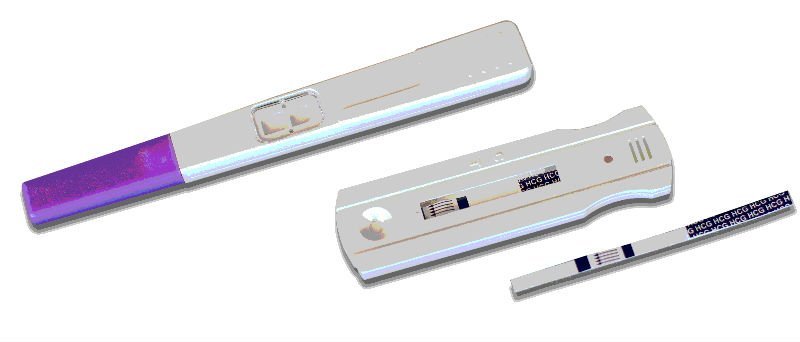
The Times Science section reports on a novel water testing strip developed by scientists at McMaster University in Canada. Instead of having to a fancy analytical assay to see if the water is good, you simply expose the lateral flow test which activates what is essentially a water diagnostic.
The New York Times:
...But scientists at McMaster University in Hamilton, Ontario, are reporting the development of a simple paper sensor — a “laboratory on a strip” — that can be dunked in a sample and give a reading a short time later, like a litmus test.
The sensor, developed by John D. Brennan and colleagues, makes use of the fact that organophosphate pesticides like diazinon inhibit the action of acetylcholinesterase, an enzyme involved in nervous system function.
More at the Journal of Analytical Chemistry
Friday, December 4, 2009


Sunday, November 29, 2009
Music video using cardiograph-like instruments
Sometimes people definitely come up with a better use for an old piece of equipment.
I'll be gone from KORB on Vimeo.
Sunday, November 8, 2009
Got Clomiphene? Let's have a baby--in Africa!
Alright, don't get too excited. The October issue of the New Scientist write about a great new opportunity for infertile couples in the continent. We would normally think of Africa and fertility rates as a field that the focus of contraception endeavors given its high birth rate. 10 to 30 per cent of African couples are infertile however, which is higher than other parts of the world. That's twice the rate of Europe for instance. So a parallel group of scientists have developed schemes that bring affordable IVF to the continent---for about $350. Traditional IVF in the United States runs abour $12,000. How they are doing is the focus of an article in The New Scientist October issue.
By using generic drugs, modularizing the processes to essential steps, and using fewer eggs to start with they've produced an affordable approach to natural conception for couples.
The table below illustrates an example of how each approach saves money and achieves comparable results
 New Scientist:
The conclusion that is really interested here is the possibility of IVF latching on to a growing trend of South-North technology transfer: solutions aimed at the developing world that may very be useful for industrialized countries (e.g., OLPC--> Netbooks, Mobile phone 3G--> Pervasive Mobile Computing)
In contrast, the New York Times Science section recently ran a story on the rising costs of IVF back home.
 A large portion of the expense comes from carrying multiple babies and the risks they carry as all too frequent premature births. It looks as if the CDC is talking to their African counterparts. The Times reports they hired an economist to look at the numbers.
By using generic drugs, modularizing the processes to essential steps, and using fewer eggs to start with they've produced an affordable approach to natural conception for couples.
The table below illustrates an example of how each approach saves money and achieves comparable results
 New Scientist:
If successful, such efforts could lower the cost of IVF everywhere. In the US, the price of one round of treatment can be up to $12,000 and is rarely covered by health insurance. In the UK, it costs about £5000 ($8000), which the National Health Service may or may not pay for, depending on where a couple lives.
"Most of what we do in the western world is overkill," says Jonathan Van Blerkom of the University of Colorado at Boulder, a member of the ESHRE team. "If you get these procedures down to a low cost and they are successful, you cannot justify charging $12,000 for an IVF cycle."
The conclusion that is really interested here is the possibility of IVF latching on to a growing trend of South-North technology transfer: solutions aimed at the developing world that may very be useful for industrialized countries (e.g., OLPC--> Netbooks, Mobile phone 3G--> Pervasive Mobile Computing)
In contrast, the New York Times Science section recently ran a story on the rising costs of IVF back home.
 A large portion of the expense comes from carrying multiple babies and the risks they carry as all too frequent premature births. It looks as if the CDC is talking to their African counterparts. The Times reports they hired an economist to look at the numbers.
In Atlanta, the Centers for Disease Control and Prevention hired an economist to predict what would happen if single embryo transfer were used in a large number of IVF cases.
Dr. Macaluso, the C.D.C. reproductive health official, estimates the patients, businesses and insurance providers would save more than $500 million annually, even taking into consideration the cost of extra in-vitro rounds, by lowering neonatal intensive care, special education and other costs of premature babies.
Monday, September 28, 2009
Expanded applications for Mobile phones in developing countries

The Economist has a special report on the transformative impact of cell phones in the developing world - a technology that we view as an enabler and multiplier of global health devices.
Tapping into a library of answers using cell-phones

I saw this article in today's New York Times about "Question Box" an answering service that people in the Uganda call into with their cell-phones and citizen-librarians scour the web for answers and call them right back. A simple solution that empowers and catalyzes development!
I was struck by the fact that these citizen-librarians are paid in cell-phone minutes ...similar to our approach to TB Therapeutic Compliance - XoutTB!
Microchipped BP Pills Remind Patients to Take Their Meds
Someone at a conference recently alerted me to this approach to compliance. Those are some tiny chips!
Microchipped BP Pills Remind Patients to Take Their Meds
Shared via AddThis
Microchipped BP Pills Remind Patients to Take Their Meds
Shared via AddThis
Sunday, August 16, 2009
Simple Breath Counter to Combat Pneumonia
From our friends at Global Health Ideas, a new find for a live saving device---a breath counter.

 "
"
healthcare + design award: fighting pneumonia in remote areas: "I just discovered an interesting blog: healthcare + design and they had this post up on design excellence awards. Not sure how much this Breath Counter costs, but worth investigating further:
“Fighting Pneumonia: Breath Counter The Breath Counter is a simple, effective testing device to help detect pneumonia in children under five, living in remote areas in developing countries. Pneumonia is the number one cause of death in the under five worldwide, killing an average of two million each year. ”

Philanthropy by Design
“The Breath Counter was created within Philips Design’s Philanthropy by Design program, established in 2005 in which, together with partners such as Non-Governmental Organizations (NGOs), public bodies and social players with complementary expertise and values, Philips Design donates its creative expertise and socio-cultural knowledge to create solutions to improve the health and environment of the more fragile categories of the world’s developing societies.”
"
Wednesday, August 5, 2009
Medical Innovation in Nicaragua
The IADB is supporting our project in Nicaragua for an appropriate biomedical innovation cluster. We are deploying a number of learning kits so that local inventors, physicians, engineers, and public health personnel can develop their next little devices that could. I'll try to cross post as much as I can, but otherwise, please visit the team blog at http://iihnicaragua.wordpress.com
$10 Medical SimulationNo, it’s not OPERATION, but it take a few cues from it. We simple breadboard circuit to create a basic platform for a medical probe simulator. You can use any time of instrument but we started with a syringe (we’re trying to get a biopsy needle). Some tin for conductive leads placed in our tissue simulator and some emdedded anatomical structures provide signals to a circuit tied to a webcam that sounds an alarm if a wrong path in the “intervention” has taken place.
Our idea is to let the doctors and healthcare workers decide what type of instrument and procedure they want to simulate. We’re providing the electronic and mechanical tools for it.

Subscribe to:
Posts (Atom)