Showing posts with label invention. Show all posts

Tuesday, August 2, 2011

Encouraging Inventiveness

A few months ago, I wrote this response piece in Boston Review. It distills a lot of things we strive for at D-Lab, IIH, and the larger MIT community: making invention a toolset that can be embedded in our community partners. For those of you who've asked for links, here's an excerpt and the full piece after the jump.

Rachel Glennerster and Michael Kremer point out that interventions in health and education need to complement much more complex machinery: human behavior. They are right. And their argument can go a step further. Engaging local stakeholders in the design of policies and solutions can boost the innovative behavior of the people whose well-being we evaluate.

At MIT’s D-Lab we believe that users in the developing world have the potential to be the everyday inventors of their own solutions. In a Nicaraguan hospital, a nurse might quietly create neonatal UV protectors from layers of surgical gauze. Around the corner in the operating room, surgeons can be found trading sutures for fishing line and drainage valves for cut-up soda bottles that work just as well. These inventive behaviors are often hidden. The designs are remaches, geuzas, improvisations, hacks. Not exactly the stuff of professional associations. This is only because they lack the last bit of formal engineering that makes them appear the brilliant solutions they in fact are.

Traditionally, technology designers who focus on the developing world try to create affordable solutions adaptable to the local environment. They might develop efficient water pumps that run on pedal power, cell phones with longer ranges and smarter features, and syringes that are safer and more accessible, with retractable needles that automatically disable them. Our approach is to encourage co-creation in the design process: we want to empower locals to invent, so they can be collaborators, not just clients. In our fieldwork we teach students to look for inventive behaviors, and many of our interventions have originated with users. Cultivating inventiveness and the tools of invention among the poor is our priority.

Tuesday, July 15, 2008

Spotlight on MIT's new Innovations in International Health: LTDC is Institutionalized)


It's almost been a month since my last post. We have been incredibly busy with a whole new program that aims to nurture, discover, invent, and launch the next little devices that could. So hopefully my absence is justified by the some of the offline project you'll read about soon.

MIT's International Development Initiative has launched Innovations in International Health. IIH is a collaborative research program that spans across MIT Departments and brings in partners from around the country and around to world to create a rich multidisciplinary environment to launch medical technology for the next four billion.

I'll let you visit the site iih.mit.edu to learn more.

Back to work for me, but I'm back with the program.

Monday, March 24, 2008

2008 NCIIA Annual Conference: Wrap up


3 : Hours in the ER before my DC flight due to Aerovax prototype airborne shrapnel landing in my left eye
7:30 : Scheduled departure from Logan to Dallas on Tuesday
5 : Number of liquid crystal displays on the Airtran Embraer Jet taking me to DC connection
1 : Number of check engine lights that rendered the LCDs useless and grounding the flight
2:30 : Arrival time into Dallas the next afternoonDespite the misadventures of travel, I left the 2008 NCIIA Conference wiser and humbled, having met an oustanding group of individuals and institutions working on fascinating products, educational strategies, and global challenges. I'm going to provide some detailed notes at the expanded Conferences and Lectures version of LTDC.

A quick preview:
  • Paul Polack on Design for the Other 90% (it's not just the museum exhibit, it's going to change the face of business and products for folks in emerging markets)
  • Sir Ken Robinson on creativity.
  • The Small Engines group from the Global Innovation Center in Energy, Health and Environment at Colorado State University (guys I need a link here).
  • Baylor University's efforts of transforming coconuts into Home Depot products
More after coffee break (Dallas has a severe deficit of Starbucks, though).

Tuesday, December 4, 2007

LTDC Goes to Graduate School: Harvard-MIT announce HST 939, Designing and Sustaining Technology Innovation for Global Health


Following a long history at MIT of incredible classes like D-Lab, Developmental Entrepreneurship and S-Lab from Sloan School of Management,the joint program in Health and Technology by Harvard and MIT have announced HST 939: Designing and Sustaining Technology Innovation for Global Health. The class will focus on exploring new ways and avenues of answering global health's most vexing problems at the intersection of business, public health, and disruptive technologies. Hands on participation in real life projects with international community and corporate partners will allow students to experience global health development 2.0 from the start.

The class is the brainchild of HST affiliate Jeff Blander, a social entrepeneur and global health expert, who teamed up with Utkan Demirci, a scientist and inventor at Harvard with a shared focus on global health technologies. Your Truly will participate in the design and instruction of the technology and bottom-up innovation aspects of the class. If my posts have been infrequent lately, I apologize, but the there has been a lot of work to set up some exciting projects which I will be sharing with you shortly.

We are continuing to receive a lot of interest from corporate and foundation sponsors about their own projects and the door is open for continuing collaboration. One of the most exciting aspects of the course is its commitment to cross-institutional collaboration. The current partners include companies, NGOs, and other academic institutions beyond Harvard and MIT. So get ready, in a few months, we'll be highlighting the next little devices that could---and the business report cards that go along with them! Everything starts in Spring 2008, but you can submit your projects now!

Monday, July 16, 2007

Next Generation PDA for the Blind


This thing sounds awesome. VoiceSense is a new type of PDA aimed at blind users that includes a pocketful of features including:
  • Voice navigation
  • MP3 player
  • MSN Messenger
  • FM Tuner
  • Daisy talking book player
Runs for 12 hours on a full charge and the button you see in the grey are a Perkins-style Braille keyboard. So the price is about the same as business laptop, $1,795, which puts it out of reach of many in developing countries. However, it definitely gives an underserved market much needed indepedence. Maybe they can trick out a version a la OLPC for less than $200.

More at Endgadget and Core77

Tuesday, June 26, 2007

Nerf dart inspired injections


Just when you thought every type of syringe had been invented, enter the Dragon Drug Gun, because one shot a time is so 2006. Shipped with prepackaged drug cartridges, not foam darts, the patent-pending device aims to deliver multiple drug in sequential order with a single trigger pull.

The company says
after a competitive tennis game, a 55-year-old man suddenly collapses. When the EMS team arrives, an electrocardiogram (ECG) reveals a cardiac arrhythmia necessitating multiple emergency medications to be dispensed via numerous syringes and requiring an EMT to notate each medication by name and dosage. With a DRAGON DRUG GUN, a single Advanced Cardiac Life Support (ACLS) cartridge inserted into the Gun would rapidly administer the correct medicines in sequential order, while automatically recording what the patient has been given.

No word on FDA approval, but it's fun to see medical technology catch up Super Soakers and N-Strike Fireflies.

More at Dragon Gun

Sunday, May 20, 2007

TimeStrip: A timer for pretty much almost anything


The time strip is an innovative timer-on-a-sticker. The timing countdown starts on a pretedermined schedule using a liquid membrane that allows a chemical to travel down a channel when you press an embedded button.

Anyone trying to figure out if their milk is too old, or more importantly, if their vaccine vials have been exposed for too long should look into adding these into their shopping list ($14.50 for a 50 pack). They even have an accidental freezing event indicator. The British company, is obviously doing their homework.

TimeStrip

Better than Blood

Popular Science is featuring an article on yet another human blood subsitute---Oxycite. One of the real advantages is that it can carry as much as 50 times as much oxygen as regular blood. That comes in handy in case of a traumatic brain injury.


“It’s like a magnet for oxygen,” says Highsmith, 33, who is 6'2" and bean-thin. He hands me a leftover glass vial of Oxycyte from the fridge, half-filled with the white fluid whose watery consistency reminds me of soymilk. It doesn’t look like much, but when combined with supplemental oxygen, the amount of Oxycyte in a jar the size of an aspirin bottle can carry as much oxygen as the four liters of blood typically pumping through a person’s body.


How much does it costs and when it will out of trials is another question, though.

More at PS


Makerfaire 2007: Wish we were there


Today is the last day of Makerfaire 2007 out west.
Projects, DIY, inventors, makers, and some fellow LTDCers running around getting excited about microcontrollers, chipsets, and welding guns. Beautiful.

More at their site.

Tuesday, May 15, 2007

The Next iPod Accessory: A Photodynamic Therapy Plug in Module for Skin Cancer


Medgadget and Wired are reporting on a small non-invasive device by a Scottish spinoff, called Lumicure that aims to treat skin cancer using photodynamic therapy. The basic idea, is band aid coated with special aminolevulinic acid, which is light sensitive as when it interacts with cancer cells. Turn on an attached LED and zap the skin cancer away.

Skin cancer, which typically requires painful or invasive treatments, affects 40 percent of all Americans at some point during their lives. The Lumicure treatment would cost between $200 and $300, compared with roughly $15,000 to $20,000 for the standard therapy. It could also eliminate the need for chemotherapy in some cases.

Lumicure's treatment is a new twist on an existing treatment called photodynamic therapy. It starts with a cream containing aminolevulinic acid, which becomes photosensitive when it comes in contact with a cancer lesion. When exposed to light, the cream interacts with only the cancerous cells, making it a very selective skin treatment.

Lumicure's light source is a low-powered organic light-emitting diode embedded in a small adhesive device. Its battery module -- roughly the size of an MP3 player -- fits easily in a pocket.


The costs savings are huge, they are quoted treatments for around $400 compared to $15,000 in comparable clinical machines. Hey Lumicure, how about a wind-up version for those of us who don't like batteries?

More at Medgadget

Wednesday, May 2, 2007

Aerovax speaks at Lemelson Program's "Invention to Venture: Affordable Technology"

Invention to Venture: Affordable Technology


On Saturday (day after tomorrow), the Lemelson-MIT program will host a day long workshop on affordable tech. It's action packed, well thought out, and Esmeralda and Jose will be speaking on one the panels in the afternoon (about Aerovax, opportunities at BOP, and how to convey that to investors), along with Chuck Lacy, President of Vermont-based Barred Rock Fund and former President of Ben and Jerry's.

Here's the stats:

Workshop Details:

Conference Co-Chairs: Iqbal Quadir and Sandy Pentland

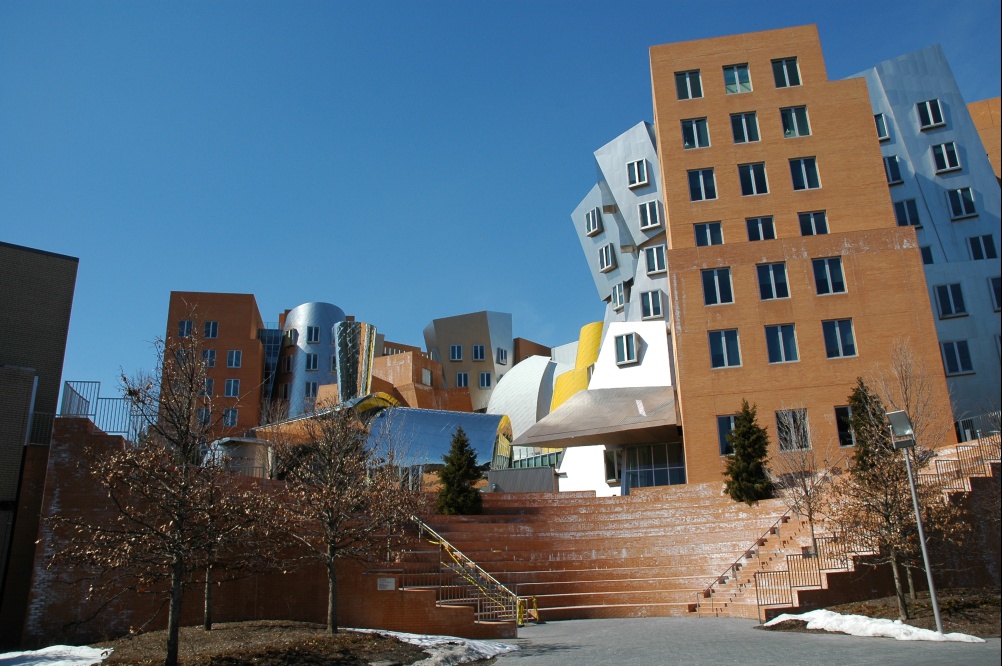
Date: Saturday, May 5, 2007 Time: 9:30 a.m. – 3:30 p.m. Location: Stata Center (32-155), MIT. The Stata is the weird building in case you don't know where to go.

Mention Aerovax at the entrance and you get a free inhalables measles shot, cherry and orange flavors upon request.


I think this will be fun...there's lots of panels. It will add the my backlog of entries for LTDC.

There is also some cool stuff going on this week---
part of EUREKA FEST.


Hopefully I'll see some you there. Okay, I was kidding about the measles, but you can learn more about it anyways.

Sunday, April 15, 2007

Vaccines are so 1955, try filtering the bugs out


Aethlon Medical’s wants get rid of any dangerous biowarfare agents you may have caught by filtering them out of your blood. We’ve come a long way from leeching and bleeding. Their Hemo Purifier filter cartridges employ plant-derived antibodies that adhere to viruses. Their two versions include a device for the ICE about a foot long, and a portable version the size of a large pen. They envision it connecting to the extracorporeal circuits of a dyalisis machine. No word on how long the procedure takes or how much it will cost. If successful, an emeregency drill might sound like “Find the nearest vein start filtering!” instead of “Duck and cover”.

More at Aethlon Medical

Friday, March 23, 2007

Little Devices in the Wind

Hong Kong University's Motorwind have made these tiny wind turbines that work with only 2m/second mini gales. More at Motorwind.

Thanks to AIDG via Twitter.

Thursday, March 22, 2007

Event alert: Learn about IP today

From Young Inventor's International
Join YII online for the Intellectual Property for Start-Ups webinar with Suvashis Bhattacharya of Thelen Reid Brown Raysman & Steiner (Silicon Valley) on Thursday, March 22nd, 6 - 7 PM EST.

More at YII